Whether you drive a Silverado to a jobsite or haul the family around in a Traverse, keeping an eye on your tires is one of the simplest ways to protect your vehicle.
Common Causes of Uneven Chevrolet Tire Wear
Uneven Chevrolet tire wear usually points to one of a few underlying issues. The most common culprits are improper tire inflation, worn suspension components, and neglected maintenance like tire rotation or alignment.Underinflated tires tend to wear more heavily on the outer edges, while overinflated tires show more wear in the center of the tread. If you notice either pattern, check your tire pressure and compare it to the recommended PSI listed on the door jamb sticker. Newer Chevrolet models may have a display screen that shows the PSI of each tire.
Worn shocks or struts can also cause cupping or scalloping on the tread, which feels like a bouncy or uneven ride. If the tread dips and rises in a wave-like pattern, your suspension is worth inspecting.
Tire Rotation vs. Wheel Alignment - What's the Difference?
A lot of drivers confuse these two services, but understanding tire rotation vs. wheel alignment can help you get the right fix for the problem you are experiencing.Tire rotation moves your tires from one position to another, front to back, or side to side, to help distribute wear more evenly. Most manufacturers recommend rotating your tires every 5,000 to 7,500 miles, often timed with an oil change. However, that can vary depending on your driving habits.
Wheel alignment, on the other hand, adjusts the angles of your tires so they’re properly oriented relative to each other and the road surface. When your alignment is off, your tires fight against each other slightly with every mile you drive, causing rapid and uneven tread wear. If your Chevy drifts to one side or your steering wheel sits crooked while you're driving straight, an alignment check is a smart move.
Both services are important, but they address different problems. Doing one without the other when both are needed will not fully resolve the issue.
How to Check Your Tread Depth at Home
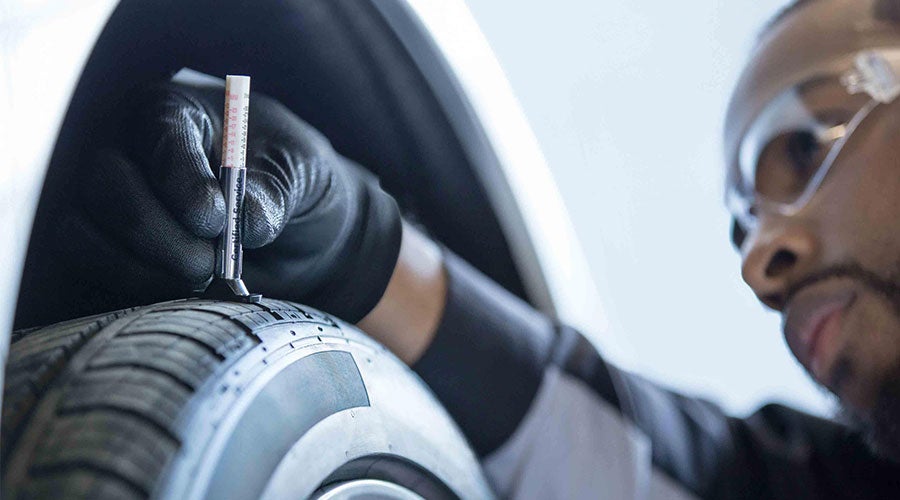
You do not need special tools to get a basic sense of your tire health. A common method is to insert a penny into the tread groove with Lincoln's head pointing down. If you can see the top of his head, your tread is at or below 2/32 of an inch, which means it’s time to replace the tires.For a more conservative check, try a quarter. If Washington's head is visible, you are around 4/32 of an inch—still legal in most states, but worth planning for replacement soon. Making this a monthly habit takes about two minutes and can help you catch wear issues early before they become a safety concern.
Why Regular Maintenance Matters for Chevrolet Tire Wear
Keeping up with scheduled maintenance is the most effective way to manage Chevrolet tire wear over the long haul. Tire rotation, wheel alignment, and proper inflation all work together to extend tread life and keep your vehicle handling predictably.Drivers in Hagerstown, MD deal with a variety of road conditions throughout the year—from summer heat to winter potholes—that can accelerate wear faster than expected. Staying on a consistent maintenance schedule helps your tires hold up through all of it.
If you’re noticing wear patterns on your Chevy or it’s been a while since your last rotation or alignment check, the team at Fitzgerald Chevrolet Hagerstown is ready to help. Stop by the shop in Hagerstown, Maryland or schedule your service appointment online to keep your tires in great shape all year long.